
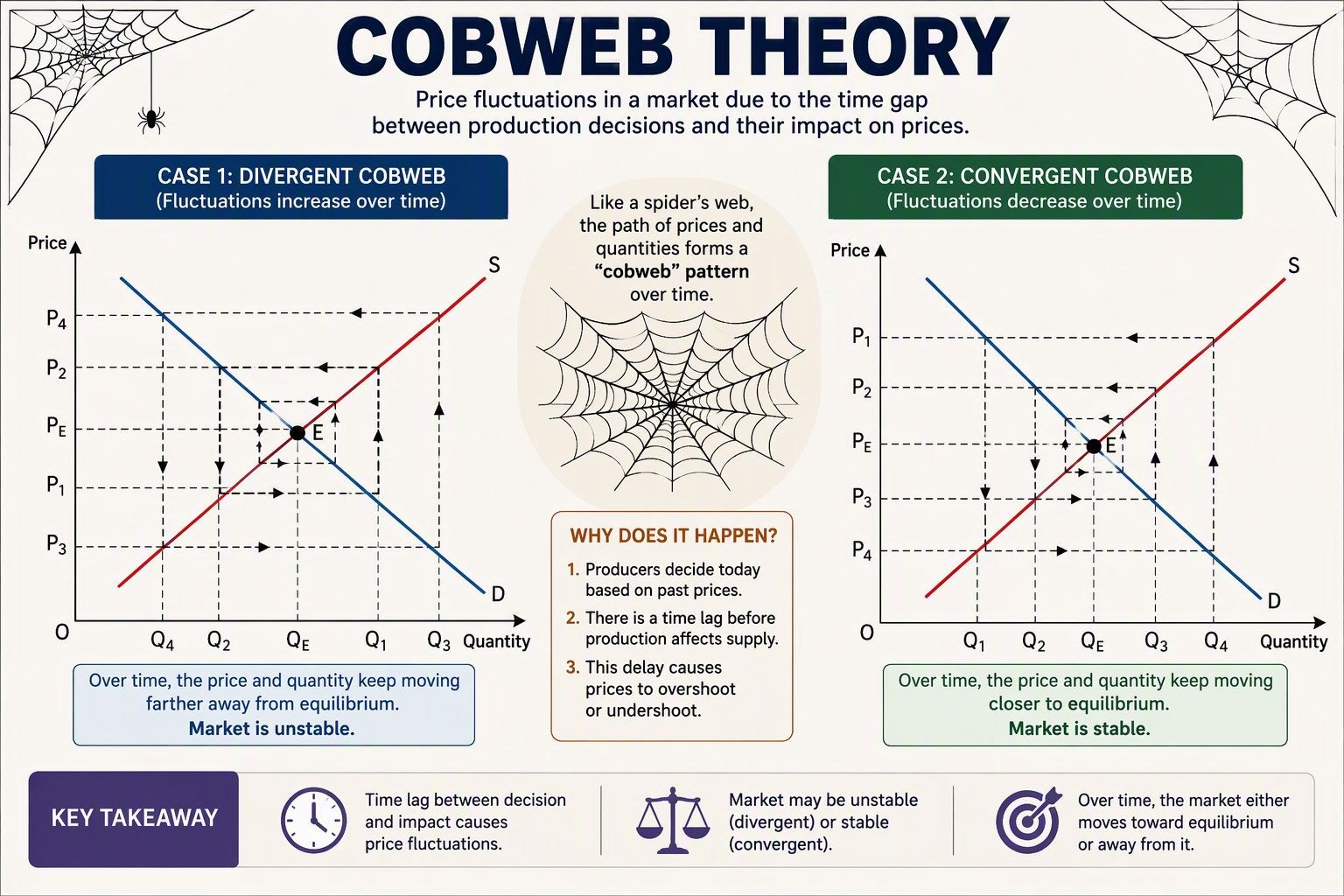
Ever wondered why the vanilla market behaves like an unpredictable rollercoaster?
For economists, Mordecai Ezekiel’s Cobweb Theory is a classic textbook model. But in the global vanilla industry, it is a lived, multimillion-dollar reality. There is perhaps no better real-world illustration of this model than the global vanilla supply chain.
When vanilla prices hit historic highs, the crop suddenly looks like a lifeline out of poverty for farmers. Seeing the attractive prices, many rush to plant vanilla vines.
The problem is that thousands of uncoordinated farmers are often making exactly the same decision at the same time.
They base their planting decisions on today’s high prices and interpret what may be a temporary price signal as a permanent opportunity. Because vanilla takes roughly three years to fully mature, the true scale of the coming increase in global production remains largely invisible to the market during this growth period.
Prices may therefore remain relatively high while thousands of new vines are still maturing.
Then the harvests arrive.
When this additional production finally enters the market, supply can rise dramatically. The market becomes flooded, and farm-gate prices crash.
Following a severe price decline, heartbroken growers may abandon their farms, reduce investment, or even cut down their vanilla vines to avoid further financial losses.
But that retreat creates another problem.
With fewer farmers producing vanilla, supply eventually tightens. A few years later, shortages emerge, prices rise again, and farmers once more rush back into production.
The entire “cobweb” cycle resets.
High prices encourage increased planting. Increased planting eventually creates oversupply. Oversupply causes prices to collapse. Low prices force farmers out of production. Reduced production then creates shortages, pushing prices back up and starting the cycle again.
The Cobweb Theory is therefore not just an abstract graph in an economics textbook. For smallholder farmers, it can become a cycle of financial whiplash that breaks the backs of rural farming communities.
Farmers at the bottom of the value chain often carry the greatest risk. They make long-term production decisions based on market prices they have little control over, while having limited access to reliable market forecasts, price-risk mechanisms, long-term contracts, storage, financing, or coordinated production planning.
True sustainability in our agricultural systems must therefore go beyond encouraging farmers to grow whichever crop happens to be commanding the highest price today.
It means protecting the people at the very bottom of the value chain from market-chasing traps.
Better market intelligence, coordinated production planning, stronger farmer cooperatives, long-term off-take agreements, value addition, diversified farm incomes, and more transparent pricing systems could help smallholders make production decisions based on where the market is going rather than simply where prices are today.
The question we should therefore be asking is:
How can we better protect smallholder farmers from the pitfalls of the Cobweb Phenomenon while still allowing them to benefit from high-value agricultural markets?