
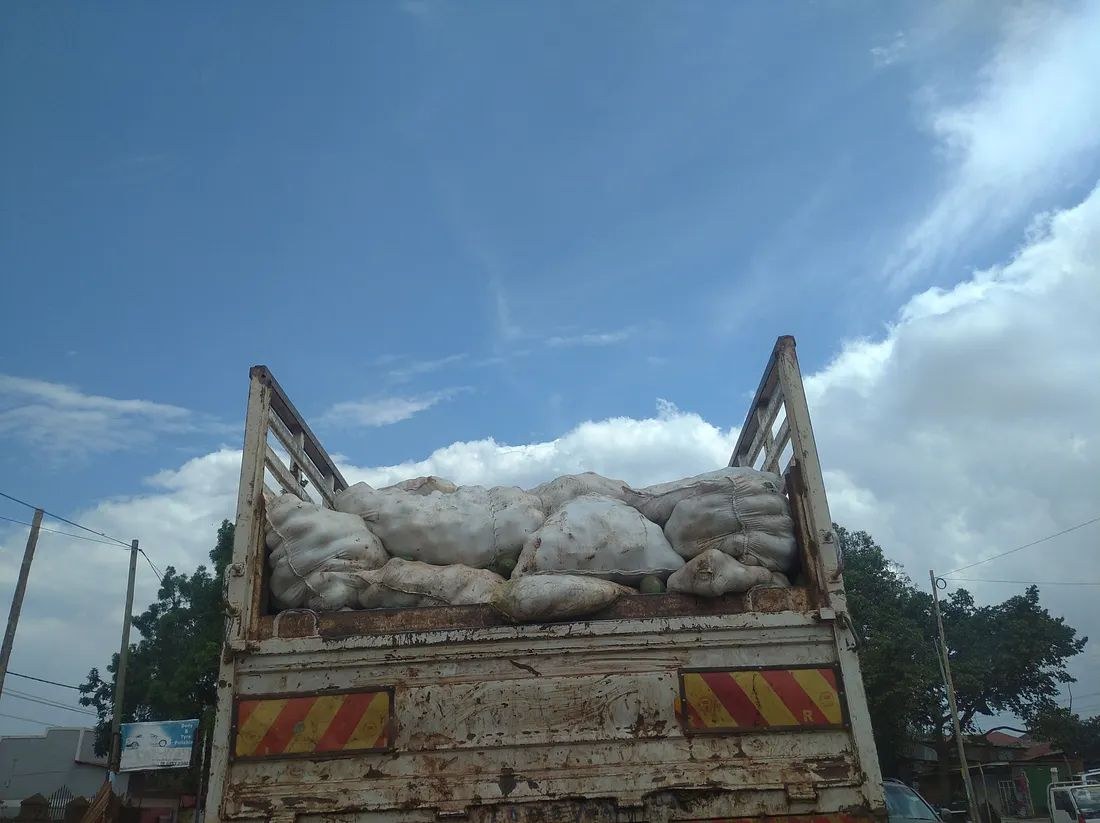
We often talk about increasing production, improving yields, and accessing export markets for African agricultural products. What we do not talk about often enough is what happens on the agricultural field and, just as importantly, what happens after produce leaves it.
One of the biggest issues we have in African agriculture is post-harvest handling.
We have the market. What we often lack is the discipline, infrastructure, and systems required to preserve quality from harvest to the final buyer.
In many African countries, food safety and quality standards are either weakly enforced or inconsistently applied in local markets. As a result, farmers, traders, transporters, processors, and aggregators become accustomed to operating in an environment where poor handling practices carry little consequence.
Produce is dried on bare ground. Storage conditions are poor. Cleaning and sorting are inadequate. Contamination risks remain high. Packaging is often improper.
For example, in some of our local food markets, people will not buy tomatoes unless they see evidence of spraying on them because, to them, it is considered “a sign of freshness.”
These practices may be tolerated locally, but they quickly become barriers when accessing premium export markets.
When international buyers reject shipments or impose stricter inspections, the conversation often shifts to market access. Yet, many times, the issue is not market access at all.
The market is there. The demand is there.
The problem is that we are failing to consistently meet the quality and safety expectations that come with those opportunities.
What is even more telling is that many of these losses are largely preventable.
A cleaner drying surface, better storage facilities, stronger quality controls, and consistent enforcement of standards can create more value than simply increasing production.
We have seen what stronger systems and quality controls can achieve in Uganda’s coffee sector. This has contributed significantly to Uganda’s position as one of Africa’s leading coffee exporters.
As TradeMark Africa organises the Africa Trade Development Forum 2026 under the theme “Building Africa’s Exports through Quality,” I hope this becomes part of the conversations on the table.
Africa does not just need to grow more food.
Africa needs to protect the value of the food it already produces.
Until post-harvest handling becomes a strategic priority across the entire value chain, we will continue losing markets, revenue, and competitiveness — not because of what we grow, but because of how we handle it.